Loading…
About Me
Full Stack Developer.
Now Securing Systems.
Ontario, CanadaOpen to Work
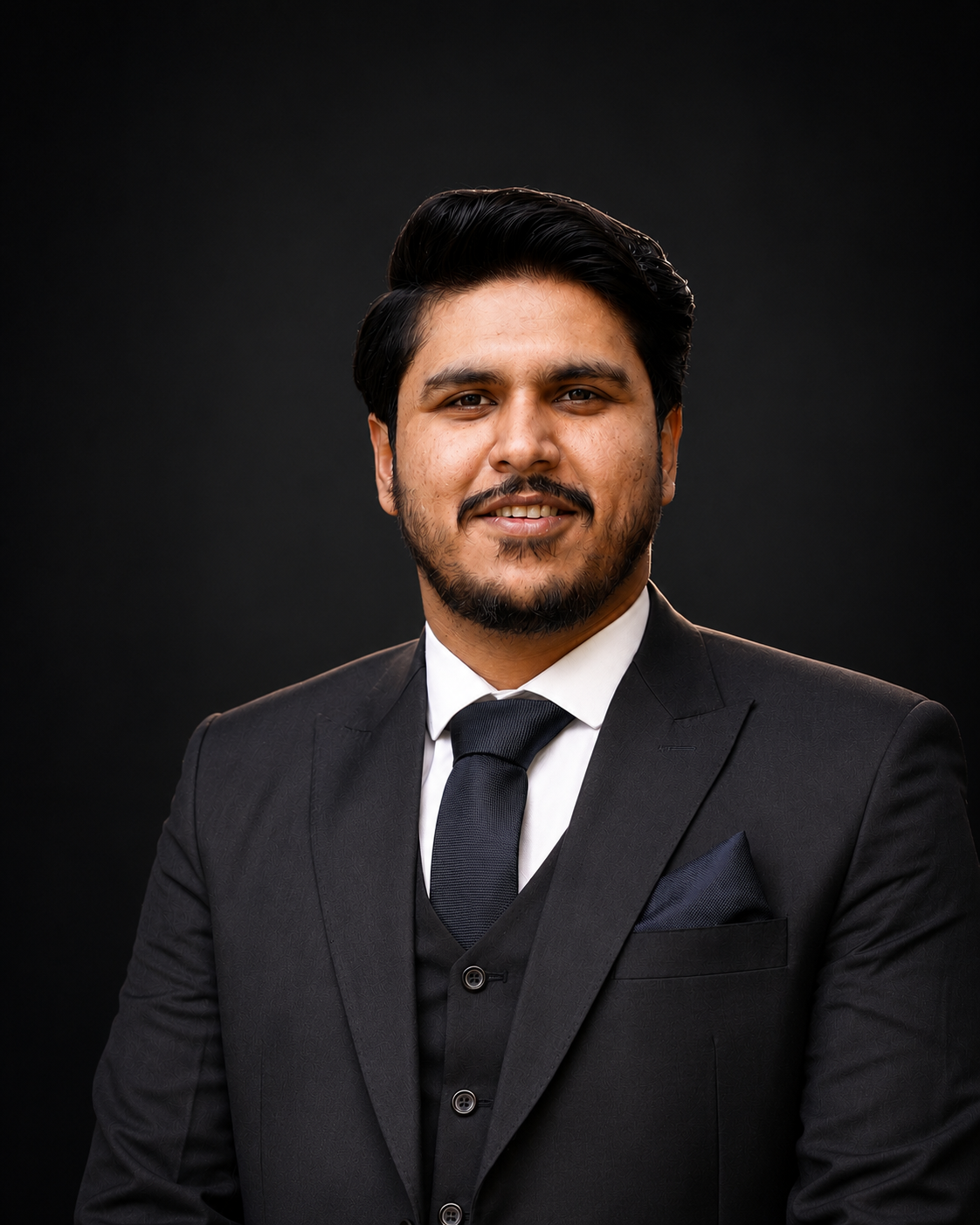
I'm a full-stack developer and cybersecurity analyst: 4+ years building secure, scalable SaaS, and now defending the systems I used to build. The throughline is simple ship it well, then make sure it holds.
4+Years Full Stack
12+Projects Shipped
1Goal: Build + Security
4+
Years XP
Available Now
Ontario · Remote, Hybrid, Onsite CA · Remote 🌐
Capabilities
Skills & Tech Stack
Full Stack foundations. Cybersecurity in progress.
JavaScript (ES6+)
TypeScript
Python
React
Angular
Next.js
React Native
Redux
NestJS
Node.js
RESTful APIs
Microservices
Sequelize ORM
PostgreSQL
MySQL
MongoDB
Tailwind CSS
Material UI
AWS (EC2, S3, RDS)
Docker
CI/CD
GitHub Actions
RAG
Vector Databases
LLM Integration
Jest
Mocha
TDD
The Journey
From Building to Defending
Full stack roots, now a cybersecurity focus.
2021 – 2023Full Stack
Started Full Stack Development
Began with HTML, CSS, and JavaScript, then progressed to the MERN stack. Built and shipped multiple production client projects at OnyxTec.
2023 – 2024Engineering
Professional Software Engineering
Built full stack web apps in production at Devsinc. Gained deep experience across React, React Native, Node.js, databases, and deployment, scaling platforms to 50k+ concurrent users.
2024Canada
Moved to Canada
Relocated to Canada and began building a career here, bringing five years of full stack engineering experience into a new market.
2024 – 2026Enterprise
Enterprise Engineering at TenX
Delivered Angular and Node modules for enterprise clients, led a frontend team, and triaged production incidents through log analysis. This support work became the bridge into security.
2025 – 2026Cybersecurity
Pivoted into Cybersecurity
Completed a Master of Cybersecurity with a 4.0 GPA and built hands-on SOC, incident response, and threat detection projects, bridging full stack engineering with security.
NowAvailable
Open to Opportunities
Actively looking for roles in full stack, cybersecurity, or both. Available onsite (GTA/Ontario), remote Canada, or remote USA.
Credentials
Certifications & Learning
Continuously upskilling in cybersecurity.
Earned
Splunk: A SIEM Tool
ThinkCloudly
Earned
SOC Analyst: A SIEM Tool
ThinkCloudly
Earned
Certified in Cybersecurity (CC)
ISC2
In Progress
Security+
CompTIA
The short version
How the work took shape.
I started at OnyxTec, building SocialSquad, a MERN event platform that scaled to 50k+ concurrent users, and tuning high-volume backends to 90% data integrity. That foundation taught me to own a product end to end, not just close tickets.
From there I worked across React/TypeScript, Angular and NestJS/Node.js for US-based companies, engineering real-time features, analytics modules, and secure frontend systems, and earning an Excellence Award along the way. The more I shipped, the more I cared about the part most teams skip: securing it.
I then earned a Master of Cybersecurity (4.0 GPA) and turned my engineering background toward defense: SOC design, incident response, and ML-based threat detection. Today I do both. I build production software and secure the systems it runs on.
The person behind the work
“The best software is built to be defended. You don't bolt security on at the end - you design for it, so the product just holds.”

Engineering philosophy
Six principles the work runs on.
01
Security is part of engineering, not a phase after it.
I don't treat security as a gate at the end. At Devsinc I implemented secure data handling and integrity controls inside real-time interactions; at TenX I built secure frontend modules and led peer code reviews. Secure SDLC is just how good software gets built.
02
Performance and reliability are features.
Engineering decisions move real numbers. Real-time analytics work at TenX boosted platform responsiveness by 35%, and SocialSquad held 99.9% data integrity while scaling to 50k+ users. Speed and reliability are what users actually feel.
03
Reusable systems compound.
Reusable Angular and React component libraries cut delivery timelines by 25–30% across enterprise clients. The right abstraction pays back every time the next person ships on top of it.
04
Frameworks turn chaos into process.
Incident response without a framework is just firefighting. Mapping every action to NIST SP 800-61 and MITRE ATT&CK turns a messy investigation into a repeatable, auditable playbook.
05
Defend with evidence, not assumptions.
Correlating SIEM, EDR, and authentication logs is how the real attack story emerges. In the TD Bank SOC simulation, that correlation surfaced 18 indicators of compromise and the full attack timeline.
06
Minimize false positives — they erode trust.
Building an ML-based IDS, I learned that feature selection often matters more than the model. Detection that cries wolf is detection nobody acts on; precision is part of the design.
What I solve best
The problems I'm built for.
Working style
What it's like to build with me.
I build it and I secure it.
I'm equally at home shipping a feature and threat-modeling it. That dual lens means fewer surprises later — security isn't someone else's problem after launch.
I communicate in outcomes.
Stakeholders care about uptime, risk, and conversion — not tool names. I translate technical findings and decisions into language leadership can act on.
I work to frameworks and evidence.
Whether it's NIST SP 800-61 or a peer code review checklist, I'd rather follow a repeatable process and let logs, metrics, and audits settle the question.
I leave systems safer than I found them.
Documentation, policies, and hardening aren't side quests — they're how the work keeps protecting people after I've moved on.
Beyond the resume
What keeps me curious.
Detection engineering with ML
Where machine learning genuinely sharpens threat detection — tuning features for precision, not chasing accuracy on paper.
Secure system architecture
Zero Trust segmentation, IAM-controlled zones, and the quiet design decisions that decide whether a breach is contained or catastrophic.
AI-assisted product features
RAG, vector search, and LLM integration applied where they actually improve a product — with secure data handling, not bolted on.
Thoughtful products need strong engineering and clear communication.
If you're building something where performance, reach, and craft matter - for product work, consulting, or a deeper engineering conversation - I'd like to hear about it.